Scahin Tendulkar - A Billion Dreams
The God of Cricket

Sachin Ramesh Tendulkar is a former indian cricketer and captain, widely regarded as one of the greatest batsmen of all time.
He was born on April 24, 1973 in Bombay(Now Mumbai).
Early Years:-
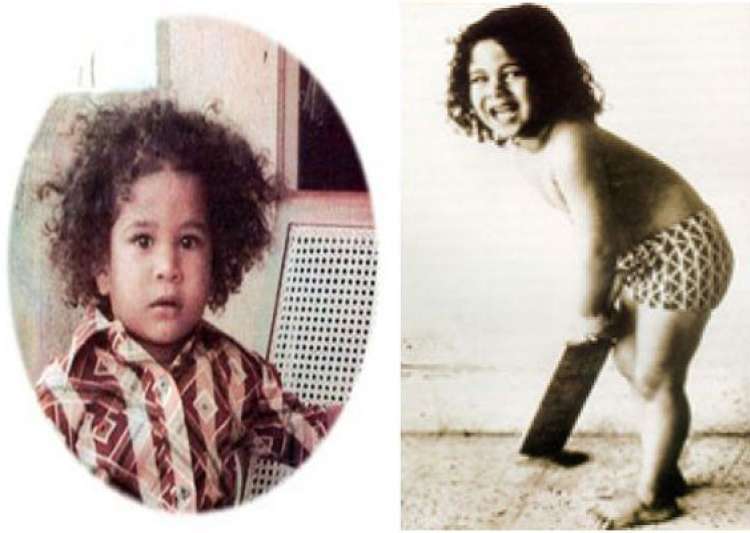
Tendulkar was born at Nirmal Nursing Home in Dadar, Bombay on 24 April 1973 in a Maharashtrian family.His father, Ramesh Tendulkar, was a well-known Marathi novelist and his mother, Rajni, worked in the insurance industry.Ramesh named Tendulkar after his favourite music director, Sachin Dev Burman. Tendulkar has three elder siblings: two half-brothers Nitin and Ajit, and a half-sister Savita. They were Ramesh's children from his first marriage. Although, Sachin has not mentioned this even in his autobiography. He spent his formative years in the Sahitya Sahawas Cooperative Housing Society in Bandra (East). As a young boy, Tendulkar was considered a bully, and often picked up fights with new children in his school. He also showed an interest in tennis, idolising John McEnroe. To help curb his mischievous and bullying tendencies, Ajit introduced him to cricket in 1984. He introduced the young Sachin to Ramakant Achrekar, a famous cricket coach and a club cricketer of repute, at Shivaji Park, Dadar. In the first meeting, the young Sachin did not play his best. Ajit told Achrekar that he was feeling self-conscious due to the coach observing him, and was not displaying his natural game. Ajit requested the coach to give him another chance at playing, but watch while hiding behind a tree. This time, Sachin, apparently unobserved, played much better and was accepted at Achrekar's academy.Ajit is ten years elder and is credited by Sachin for playing a pivotal role in his life
Early domestic career:-
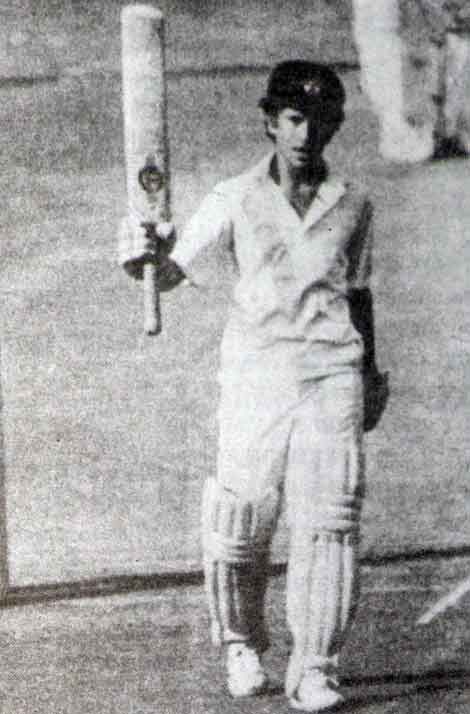
On 14 November 1987, Tendulkar was selected to represent Bombay in the Ranji Trophy, India's premier domestic First-class cricket tournament, for the 1987 to 1988 season. However, he was not selected for the final eleven in any of the matches, though he was often used as a substitute fielder.He narrowly missed out on playing alongside his idol Gavaskar, who had retired from all forms of cricket after the 1987 Cricket World Cup. A year later, on 11 December 1988, aged just 15 years and 232 days, Tendulkar made his debut for Bombay against Gujarat at home and scored 100 not out in that match, making him the youngest Indian to score a century on debut in first-class cricket. He was handpicked to play for the team by the then Bombay captain Dilip Vengsarkar after watching him easily negotiating India's best fast bowler at the time, Kapil Dev, in the Wankhede Stadium nets, where the Indian team had come to play against the touring New Zealand team. He followed this by scoring a century in his first Deodhar and Duleep Trophies, which are also Indian domestic tournaments.
International career:-
Raj Singh Dungarpur is credited for the selection of Tendulkar for the Indian tour of Pakistan in late 1989,and that too after just one first class season. The Indian selection committee had shown interest in selecting Tendulkar for the tour of the West Indies held earlier that year, but eventually did not select him, as they did not want him to be exposed to the dominant fast bowlers of the West Indies so early in his career. Tendulkar made his Test debut against Pakistan in Karachi in November 1989 aged just 16 years and 205 days. He made just 15 runs, being bowled by Waqar Younis, who also made his debut in that match, but was noted for how he handled numerous blows to his body at the hands of the Pakistani pace attack. In the fourth and final Test in Sialkot, he was hit on the nose by a bouncer bowled by Younis, but he declined medical assistance and continued to bat even as he gushed blood from it. In a 20-over exhibition game in Peshawar, held in parallel with the bilateral series, Tendulkar made 53 runs off 18 balls, including an over in which he scored 27 runs (6, 4, 0, 6, 6, 6) off leg-spinner Abdul Qadir. This was later called "one of the best innings I have seen" by the then Indian captain Krishnamachari Srikkanth. In all, he scored 215 runs at an average of 35.83 in the Test series, and was dismissed without scoring a run in the only One Day International (ODI) he played. Thus Sachin Tendulkar became the youngest player to debut for India in Tests at the age of 16 years and 205 days and also the youngest player to debut for India in ODIs at the age of 16 years and 238 days.

Rise through the ranks:-
Tendulkar's performance through the years 1994 to 1999 coincided with his physical peak, in his early twenties. On the day of the Hindu festival Holi, Tendulkar was told to open the batting at Auckland against New Zealand in 1994. He went on to make 82 runs off 49 balls. He scored his first ODI century on 9 September 1994 against Australia in Sri Lanka at Colombo. It took him 78 ODIs to score his first century.

Tendulkar's rise continued when he was the leading run scorer at the 1996 World Cup, scoring two centuries. He was the only Indian batsman to perform in the semi-final against Sri Lanka. Tendulkar fell amid a batting collapse and the match referee, Clive Lloyd awarded Sri Lanka the match after the crowd began rioting and throwing litter onto the field.After the World Cup, in the same year against Pakistan at Sharjah, Indian captain Mohammed Azharuddin was going through a lean patch. Tendulkar and Navjot Singh Sidhu both made centuries to set a then record partnership for the second wicket. After getting out, Tendulkar found Azharuddin in two minds about whether he should bat. Tendulkar convinced Azharuddin to bat and Azharuddin subsequently unleashed 24 runs off just one over. India went on to win that match. It enabled India to post a score in excess of 300 runs for the first time in an ODI.
Captaincy:-
Tendulkar's two tenures as captain of the Indian cricket team were not very successful. When Tendulkar took over as captain in 1996, it was with huge hopes and expectations. However, by 1997 the team was performing poorly. Azharuddin was credited with saying "Nahin jeetega! Chote ki naseeb main jeet nahin hai!",which translates into: "He won't win! It's not in the small one's destiny!".Tendulkar, succeeding Azharuddin as captain for his second term, led India on a tour of Australia, where the visitors were beaten 3to 0 by the newly crowned world champions. Tendulkar, however, won the player of the series award as well as player of the match in one of the games.After another Test series defeat, this time by a 0 to 2 margin at home against South Africa, Tendulkar resigned, and Sourav Ganguly took over as captain in 2000.Tendulkar remained an integral part of the Indian team's strategic processes. He was often seen in discussion with the captain, at times actively involved in building strategies.Former captain Rahul Dravid publicly acknowledged that Tendulkar had been suggesting moves such as the promotion of Irfan Pathan up the batting order which, although only temporary, had an immediate effect on the team's fortunes.In 2007, Tendulkar was appointed vice-captain to captain Rahul Dravid.During the Indian team's 2007 tour of England, Dravid's desire to resign from the captaincy became known. The BCCI President Sharad Pawar personally offered the captaincy to Tendulkar. However, Tendulkar asked Pawar not to appoint him captain, instead recommending Mahendra Singh Dhoni to take over the reins. Pawar later revealed this conversation, crediting Tendulkar for first forwarding the name of Dhoni, who since achieved much success as captain
Some incident that affect Scahin's Career
Mike Denness incident:-
In India's 2001 tour of South Africa in the second test match between India and South Africa at St George's Park, Port Elizabeth, match referee Mike Denness fined four Indian players for excessive appealing, as well as fined the Indian captain Sourav Ganguly for not controlling his team. Tendulkar was given a suspended ban of one game by Denness in light of alleged ball tampering. Television cameras picked up images that suggested Tendulkar may have been involved in cleaning the seam of the cricket ball. This can, under some conditions, amount to altering the condition of the ball. Denness found Sachin Tendulkar guilty of ball tampering charges and handed him a one Test match ban.The incident escalated to include sports journalists accusing Denness of racism, and led to Denness being barred from entering the venue of the third Test match. The ICC revoked the status of the match as a Test as the teams rejected the appointed referee.The charges against Tendulkar and Sehwag's ban for excessive appealing triggered a massive backlash from the Indian public.

Injuries and decline amid surpassing Bradman's haul:-
Sachin Tendulkar continued performing well in Test cricket in 2001 and 2002, with some pivotal performances with both bat and ball. Tendulkar took three wickets on the final day of the famous Kolkata Test against Australia in 2001. Tendulkar took the key wickets of Matthew Hayden and Adam Gilchrist, who were centurions in the previous Test.In the five-match ODI series that followed, he took his 100th wicket in ODIs, claiming the wicket of then Australian captain Steve Waugh in the final match at the Fatorda Stadium in Goa.In the 2002 series in the West Indies, Tendulkar started well, scoring 79 in the first Test. In the second Test at Port of Spain, Sachin Tendulkar scored 117 in the first innings, his 29th Test century in his 93rd Test match, to equal Sir Donald Bradman's record of 29 Test hundreds.Then, in a hitherto unprecedented sequence, he scored 0, 0, 8 and 0 in the next four innings,getting out to technical "defects" and uncharacteristically poor strokes.He returned to form in the last Test scoring 41 and 86. However, India lost the series.This might have been the beginning of the "decline" phase in his career which lasted till 2006. In the third Test match against England in August 2002, Sachin scored his 30th Test century to surpass Bradman's haul, in his 99th Test match.Tendulkar made 673 runs in 11 matches in the 2003 Cricket World Cup, helping India reach the final. While Australia retained the trophy that they had won in 1999, Tendulkar was given the Man of the Tournament award.He continued to score heavily in ODI cricket that year, with two hundreds in a tri-series involving New Zealand and Australia.As a part-time bowler, he dismissed an exhausted centurion, Matthew Hayden in the tri-series final.
Quick Important Fcat Related to Scahin Tendulkar Cricket career-
- Tendulkar has 13 coins from his coach Ramakant Achrekar. He would win a coin if he could get through an entire session of nets without being dismissed.
- Mar 16, 2012 - More than a year after scoring his 99th international hundred, Tendulkar reaches the landmark that might never be equaled, scored his 100th international ton against Bangladesh in Dhaka.
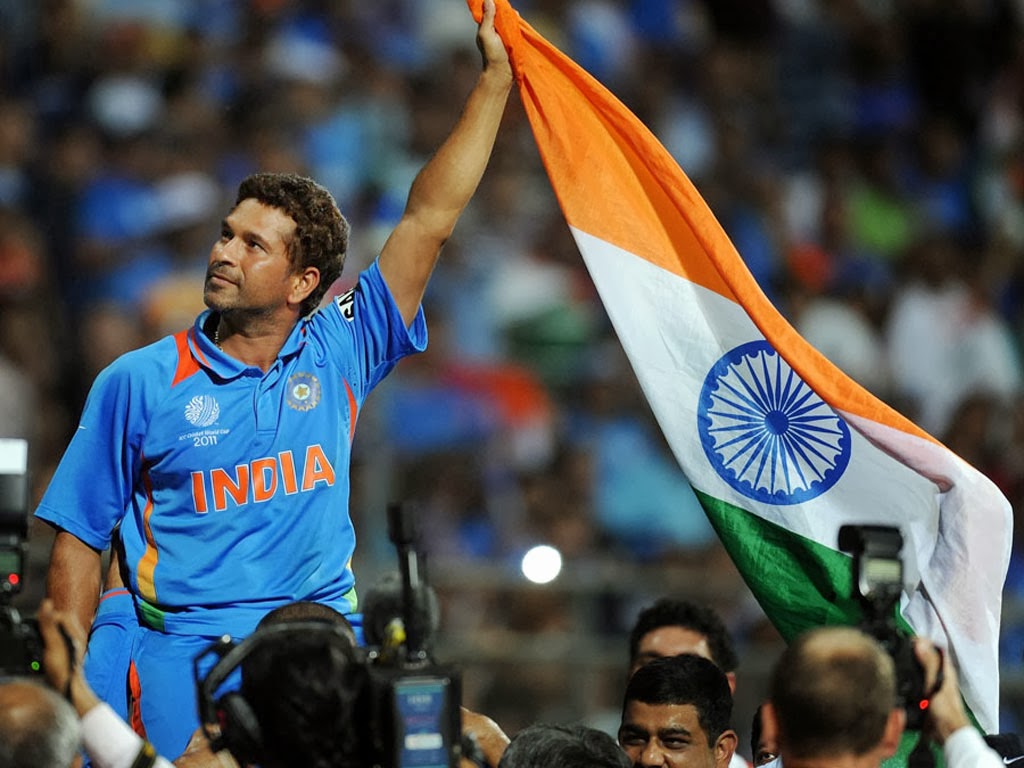
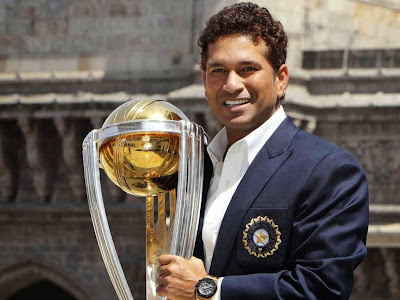
- Apr 2, 2011 - Hits two hundreds and is first to score 2000 runs in World Cups as India win the World Cup beating Sri Lanka in the final at Wankhede. He also scored a 85 in the semi-final against Pakistan, and was the second-highest run-getter in the tournament with 482 at an average of 53.55.
- Feb 19, 2011 - Became the most capped player in ODIs with the World Cup opening game vs Bangladesh, surpassing Sanath Jayasuriya's tally of 444 matches.

To know more about Sachin cricket achivement and stastics please visit Wikipedia